Sunday, August 5, 2012

Economic Indicator - IIP - Index of Industrial Production


IIP - Index of Industrial Production is an Economic Indicator tracking the production activities on a monthly /quaterly/half yearly/annual basis in the country . Like every other indicator , IIP numbers are produced with a reference point in the past . In case of India , the revised benchmark is 1993-94 , for US its 2002 with level of 100 . The calculated data can be tabulated to form a time series in order to compare the output across various years .

The IIP numbers are calculated in 3 ways as described below :
(1)Use Based -  The industry is categorized broadly as Consumer Goods, Durable and Non durable goods ,Basic and Intermediate goods . 
(2) Sector wise - Industry is categorized sector wise like Electricity , Mining , Manufacturing etc
(3)Detailed Sector - Industry is categorized in to various detailed sectors, the link for which has been provided below . 
Sectors Under Consideration for IIP Calculation : Click on the link here to get the complete list of sectors . Click here

Data Sources for calculation of IIP (for India) :  .The data for the IIP estimate is supplied by 15 source agencies which include Department of Industrial Policy and Promotion, Indian Bureau of Mines, Central Statistical Organisation and Central Electricity Authority, among others.

How is IIP index calculated : IIP index is calcualted with the Laspeyre's formula . The calculation involves following steps . 
(1) Identifying the weights of the various sectors on Product level , Product Group level and Industry level . These weights will be identified on the basis of the total output in sales or gross output value .  The weights and the sectors are updated periodically to incorporate the changing market scenario and the economic dynamics . Weights on the product level can be updated annually while those of Industry level can be updated every 5 years
(2) Once the weights are calculated the IIP number is calculated ,The index is a simple weighted arithmetic mean of production relatives calculated by using Laspeyre’s formula
I=Σ(Wi*Ri)/ΣWi,
Where I is the Index, Ri is the production relative of the i-th item for the month in
question and Wi is the weight allotted to it based on Gross Output.
The item-wise indices are vertically aggregated at 2-digit of industrial classification
based on weighted average, weights are proportionate to Gross Value Added.

Information Sources :

Tuesday, April 3, 2012

A Simple Diagram of Relation between Repo Rate and Inflation


Source : RiskBank

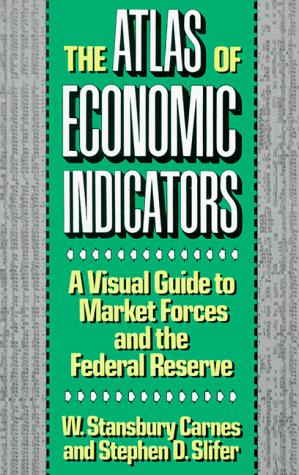
The Atlas of Economic Indicators: A Visual Guide to Market Forces, and the Federal Reserve


The book is written in a very simple and lucid way .  All the key statements/theories  are duly supported  by appropriate visuals along with real time examples.  As the name suggests the book deals primarily with the key economic indicators used for assessing the health of the economy.   Various Classifications and the Sub-categories are also presented in a very clinical way . What captured my attention is that the equations and the basic definitions are also  presented in a pictorial manner which  makes it easier to visualize and grasp the essence of the topic. The author has made a point  that this book can be used across a varied class of users  including those who are not from the financial background.  . In a nutshell ,  I will recommend this book to all those who are looking for a book to read about the basics of the Economic Indicators.
Title : The Atlas of Economic Indicators: A Visual Guide to Market Forces, and the Federal Reserve
Author : W. Stansbury Carnes and Stephen D. Slifer
Reference link on Amazon : http://www.amazon.com/Atlas-Economic-Indicators-Federal-Reserve/dp/0887305377
--
NVS

Economic Indicators : Debt/GDP Ratio


Ratio of Debt to GDP is one of the imp factors from economic point of view, used to gauge the economic health of the country. Usually countries strive to have this ratio as low as possible so as to avert such financial and unexpected circumstances.
To start with , lets understand the concept of  GDP   -In a simple way, it’s summing up what all the people earned OR spent over a definite period of time .Logically; both the measures should arrive at the same conclusion.
Alternative Definition is: Gross domestic product (GDP) refers to the market value of all final goods and services produced in a country in a given period.
There are multiple ways of calculating this GDP. For details on how to calculate, click here

Friday, March 16, 2012

What Govt can do more through SSA- Sarva Shiksha Abhiyan and RET


Importance of Education is something  on which any man can talk about endlessly but only few have actually understood and acted in the way one should have to handle the Global Issue of Illiteracy ,especially  for the needy ones The Govt. has 2 flagship programs for education : Sarva Shiksha Abhiyan (SSA) and Right to Education (RTE). Here are some of the alarming stats (Courtesy: Times of India ).
  • Mean years of schooling in India is 4.4 years ( China  7.5 years)
  • %GDP spent on Public education is down to 3.8% in 2008-09 compared to 4.3% in 2000-01 whereas Cuba  has 18.7% which is highest.
  • Only 21000cr INR have been received by RTE for 2011 out of sanctioned 48000cr.
  • Of 7.5 lakh candidates who appeared for CBSE's all-India teacher recruitment test , only 93,000 passed
  •  NGO Parham’s Annual Status of Education Report (Aser) shows that nearly 47% Class V students cannot read Class II texts, while over 63% of Class III students cannot subtract
  • India has a shortage of 1.5 million teachers.

Sunday, June 19, 2011

Comparison of Sensex returns against Fixed Deposit Rates

Following table compares the returns of investment  in Fixed Deposits and Indian Stock Exchange .

Source : Economic Survey of India 

Tuesday, May 10, 2011

Stock Exchanges, Investments and Derivatives


The book “Stock Exchanges, Investments and Derivatives” written by V Raghunathan and Prabina Rajib deals with the common issues that any Investor faces , specifically those who do not have the technical background.
What’s the plot?
The book is a compilation of 250 most nagging questions an Investor has regarding the Stock market. The book deals with all the basics of the Stock Market. What the market is all about along with a brief history on Indian Markets. All the aspects of the stock market i.e. Equities, IPO, Mutual Funds, Bond Market, Derivatives, Share Pricing models, Introduction to Portfolio Management are introduced chapter wise.
What to expect?
The book is all about sharing the basics of the stock market in a question answer format. The highlight of the book is the simple language that has been used; the concepts are explained in a lucid manner without going into the technical details or using any financial jargons. All the theories and intricate material has been supported by appropriate examples, again which are simple to understand. The author has very tactfully touched all the topics of the market without going into details.
Verdict
I will recommend this book to all those who want to know the basics of the stock market. This is certainly book where I would like to begin. A word of Caution: This book is NOT about how to earn money in Stock Market or Trading Strategies. It’s a book for understanding the concepts.


Tuesday, February 22, 2011

Begging - Should it be Encouraged ?


Begging - technically known as “panhandling” means is wherein the needy ask for material benefit,  money, or even basic amenities like food and clothing .
But the question  here is should this activity be encouraged ??
Image Courtesy : http://www.pravoslavie.ru
It’s a human tendency that u feel like helping someone when they are in need – Good karma as we say it ..But is it really a good karma ?
They are many reasons that ppl keep begging . Some think they cannot do anything else , some don know whether they can do anything , then there are some who think that begging is better and easy money  , sit in a place and keep pleading ppl to help them  . Begging has become more of an art rather than an unwanted activity.

Monday, November 22, 2010

The Dynamics of 2 & 3 - Group Behaviour

We come across so many people in life. See a thousand faces every day, notice a hundred , talk to some and care for a few . The obvious fact is that our behavior varies from person to person depending upon the degree of our comfort, how well we are accustomed with him/ her, how trustworthy and important he/she is and some other ulterior motives, if any that is. From my observation, that is just one aspect that governs our behavior. We can treat the same person differently if we meet him in person and when we meet in a group. My article is just about that and my observations relating to the same.